Mount Rainier Itinerary: 1, 2 & 3 Day Trip Ideas for First-Time Visitors
Mount Rainier National Park is one of the easiest and most rewarding weekend trips from Seattle. Whether you have just one day or a full three days, you can experience alpine views, wildflower meadows, glacier scenery, and some of the best hiking in Washington.
This itinerary is designed for first-time visitors who want a clear plan without feeling rushed. Each day builds on the previous one — so you can stop at Day 1, extend to Day 2, or complete the full 3-day loop.
Content table
- 🧭 Mount Rainier Itinerary at a Glance
- ⚠️ Biggest Mistakes First-Time Visitors Make
- 📅 When to Visit
- 🌄 Day 1: Paradise Area Highlights (Best for Short Trips)
- 🚗 Day 2: Reflection Lake + Stevens Canyon + Transition to Sunrise
- 🥾 Day 3: Sunrise Area
- 🎟️ Entrance Fees & Passes
- 🚧 Road & Seasonal Access
- 🏕️ Where to stay
- 🎒 What to Pack
- ❓FAQ
Why I built this guide
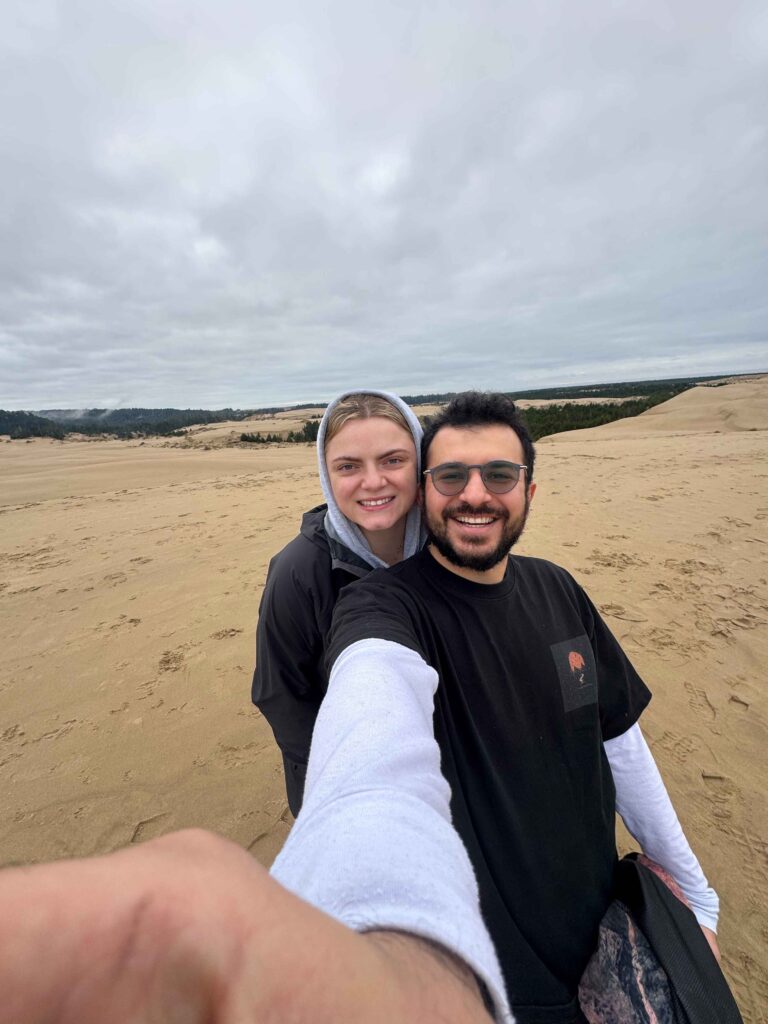
I live in the Pacific Northwest and spend a lot of time exploring the areas around Seattle, especially places that can be reached in a few hours or less. I’m drawn to trips that don’t require long drives or packed itineraries — just good scenery, time outdoors, and space to slow down.
The places on this page aren’t recommendations pulled from a list. They’re destinations I’ve personally visited, camped at, hiked through, or spent real time exploring. I built this guide to share the kinds of weekend getaways I actually return to — places that feel like a reset, not a checklist.
If you’re looking for realistic trips, honest experiences, and ideas that work for both quick escapes and slower weekends, you’re in the right place.
Mount Rainier Highlights Map
Mount Rainier Itinerary at a Glance
📍 Trip Basics
• Location: Mount Rainier National Park, Washington
• Distance from Seattle: 2–3 hours
• Ideal trip length: 2–3 days
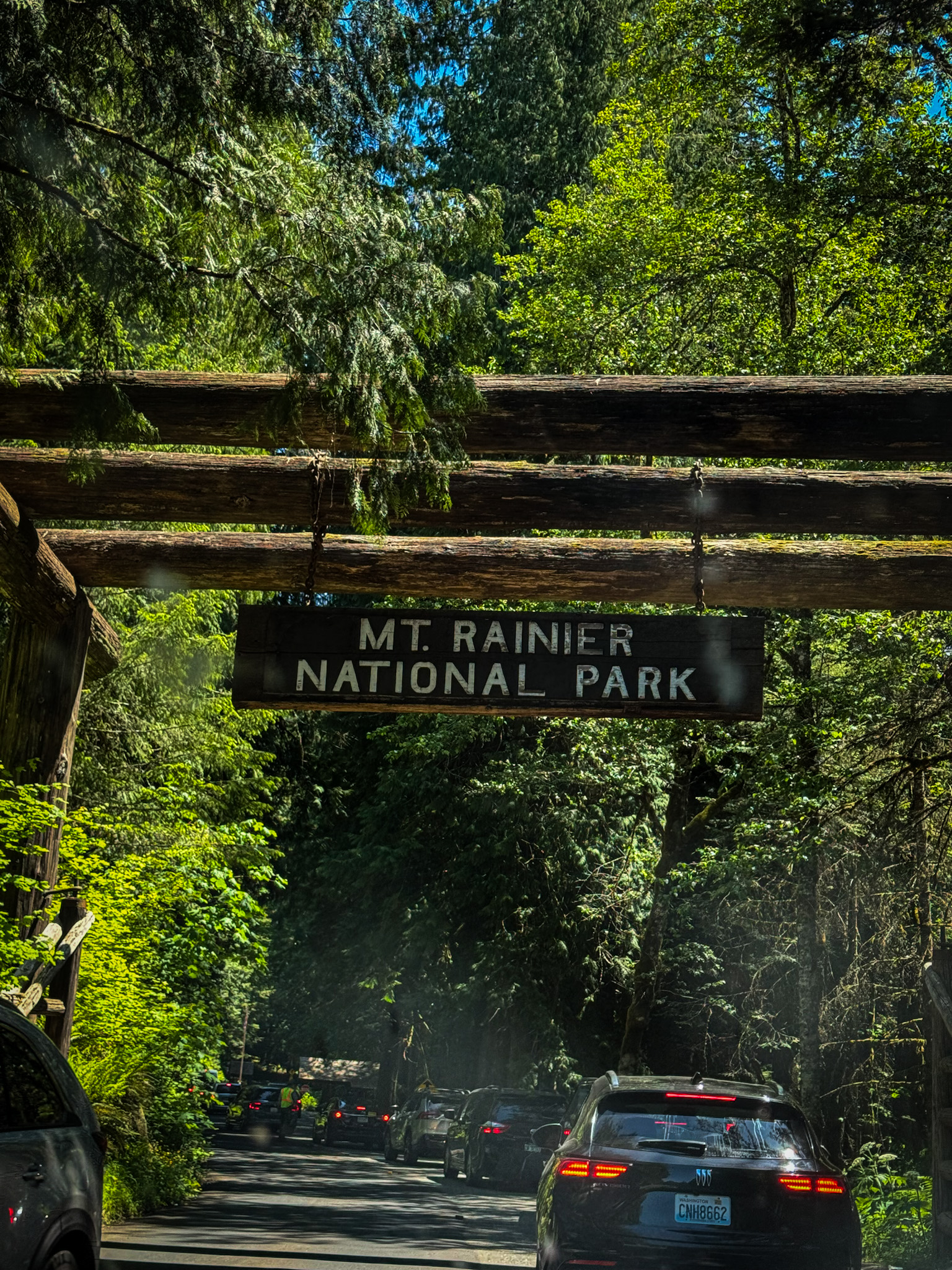
• Entrance fee: $30 per vehicle (7 days)
• Cell service: Limited to none
🏔 Best Areas for First-Time Visitors
• Paradise → Best overall views + easy trails
• Reflection Lake → Best photography spot
• Sunrise → Higher elevation, dramatic landscapes
🗓 How Many Days?
• 1 Day → Paradise highlights
• 2 Days → Paradise + Stevens Canyon Road
• 3 Days → Paradise + Reflection Lake + Sunrise
Biggest Mistakes First-Time Visitors Make
1. Arriving after 10 a.m. in summer
Late arrivals face long entrance lines, full parking lots, and limited access to popular areas like Paradise and Sunrise. Early mornings offer better parking, fewer crowds, and clearer mountain views.
2. Not checking road and area closures
Roads close frequently due to snow, construction, or weather damage. Always check the official park status before you leave—GPS apps often show roads as open when they’re not.
Here is the site you can check closed roads
3. Underestimating snow and changing weather
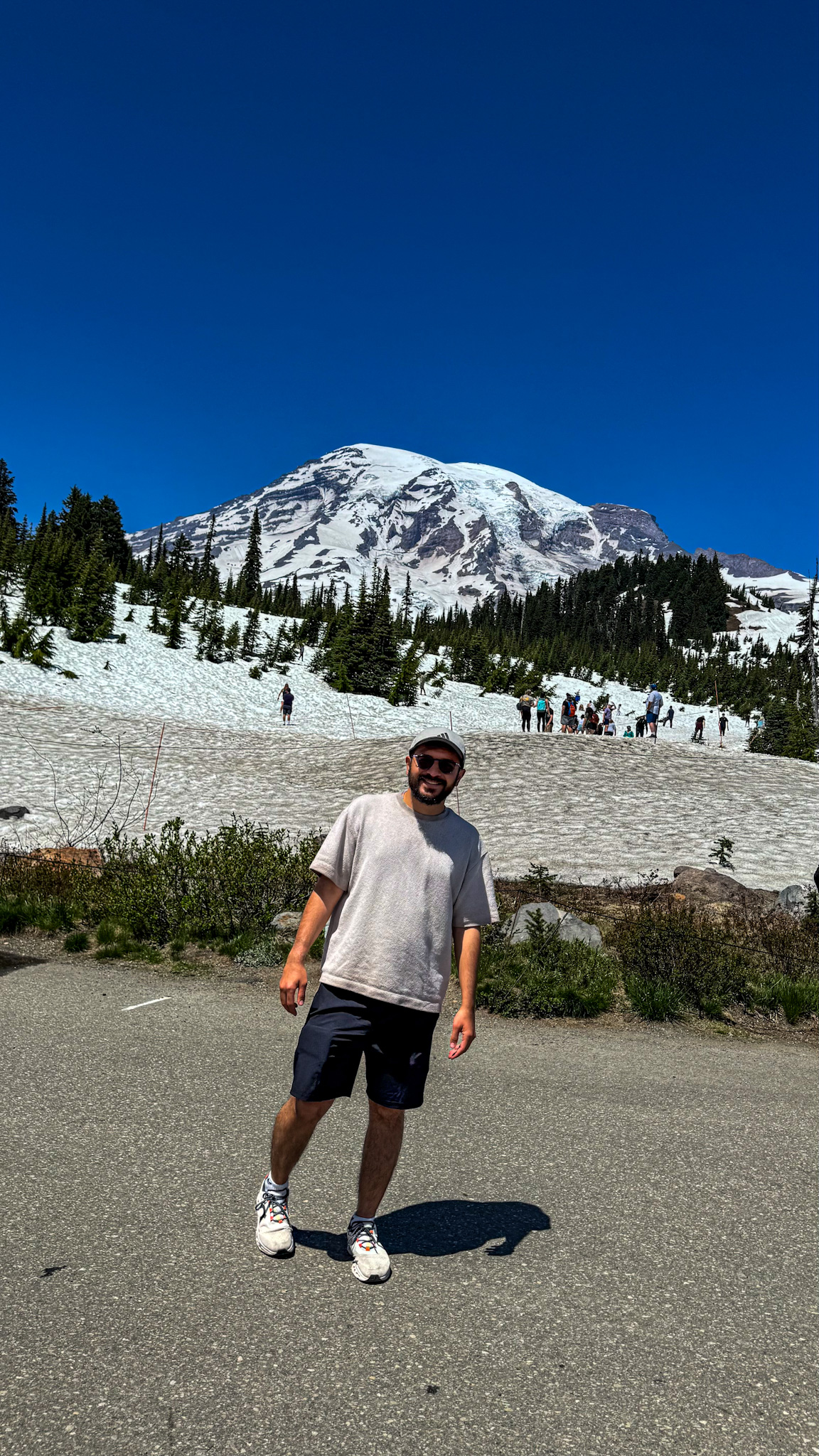
Snow can remain on trails well into summer, especially at higher elevations. Conditions can shift quickly from sunny to foggy or cold, even on clear forecast days.
4. Trying to see Paradise and Sunrise in one rushed day
These two areas are far apart and require slow mountain driving. Trying to do both usually means spending most of the day in the car instead of enjoying the scenery.
5. Assuming Mount Rainier is an easy, casual park
Despite paved roads and viewpoints, Rainier is a high-elevation alpine environment. Distances, elevation gain, and thinner air often surprise first-time visitors.
6. Wearing the wrong footwear
Sneakers and sandals are common mistakes. Snowfields, muddy trails, and rocky terrain require sturdy shoes with good traction, even on short hikes.
7. Not bringing enough food and water
Food options inside the park are limited and seasonal. Visitors often underestimate how long they’ll be out exploring and run out of water faster than expected.
8. Skipping sunrise or early-morning hours
Many visitors arrive mid-day and miss the clearest views. Mornings typically offer better visibility before clouds build around the mountain.
9. Ignoring elevation and physical limits
Hikes that look short on a map can feel much harder due to elevation gain and thinner air. Overestimating fitness leads to fatigue and rushed turnarounds.
10. Relying on cell service or last-minute planning
Cell service is unreliable throughout the park. Maps, trail plans, and updates should be downloaded or checked before arriving.
When to Visit Mount Rainier
Summer (July–September) — Best Overall
• Full access to Paradise and Sunrise
• Wildflowers peak (late July–early August)
• Most trails, roads, and visitor services open
This is the most popular and reliable season. Expect crowds, but also the best hiking conditions and the clearest views of the mountain.
Fall (October) — Quiet but Limited
• Fewer crowds and cooler temperatures
• Fall colors at lower elevations
• Early snow can close roads at any time
October is peaceful but unpredictable. Some areas may still be accessible early in the month, but closures can happen quickly after the first storms.
Winter (November–April) — Snow-Focused Visits
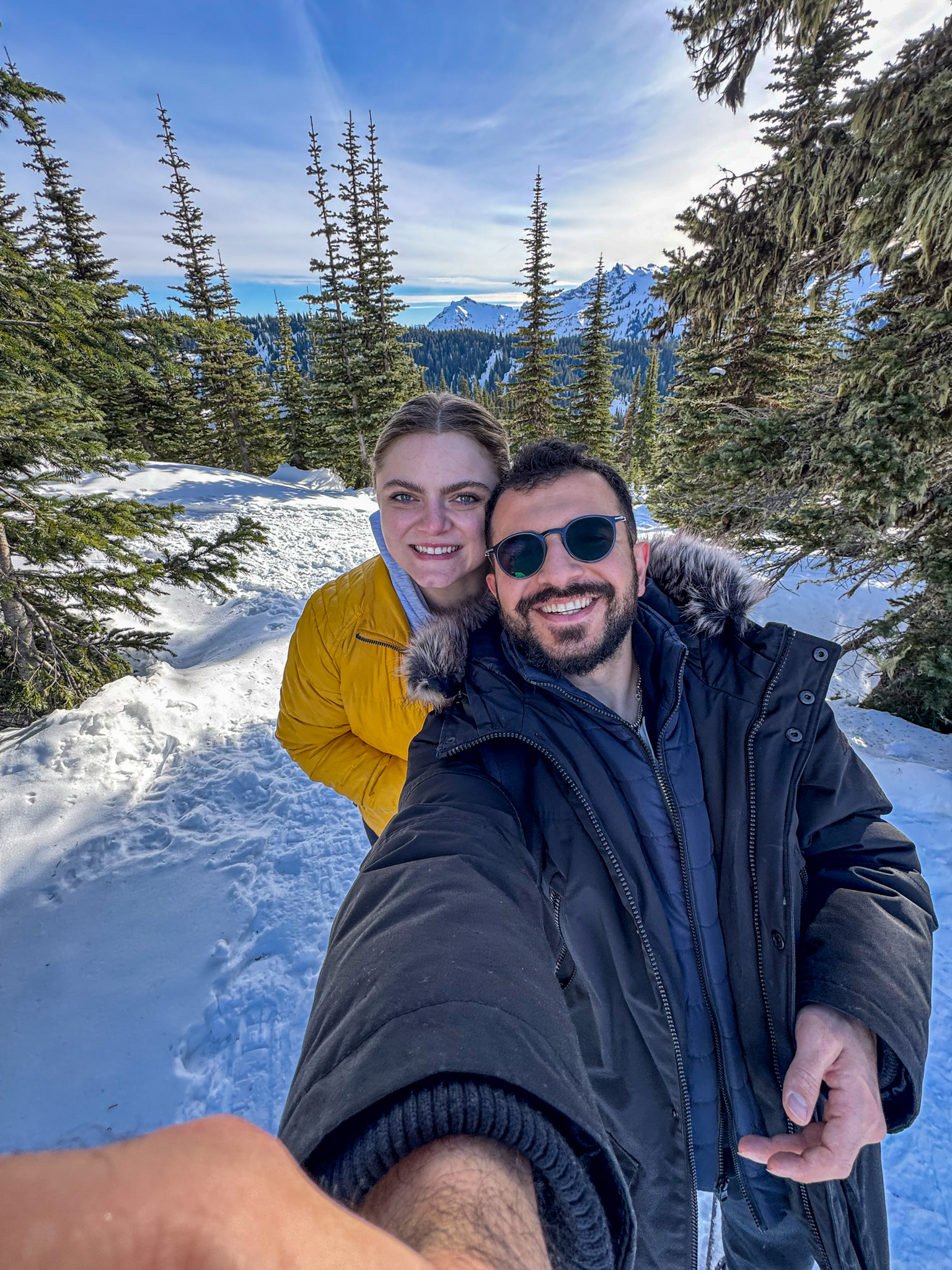
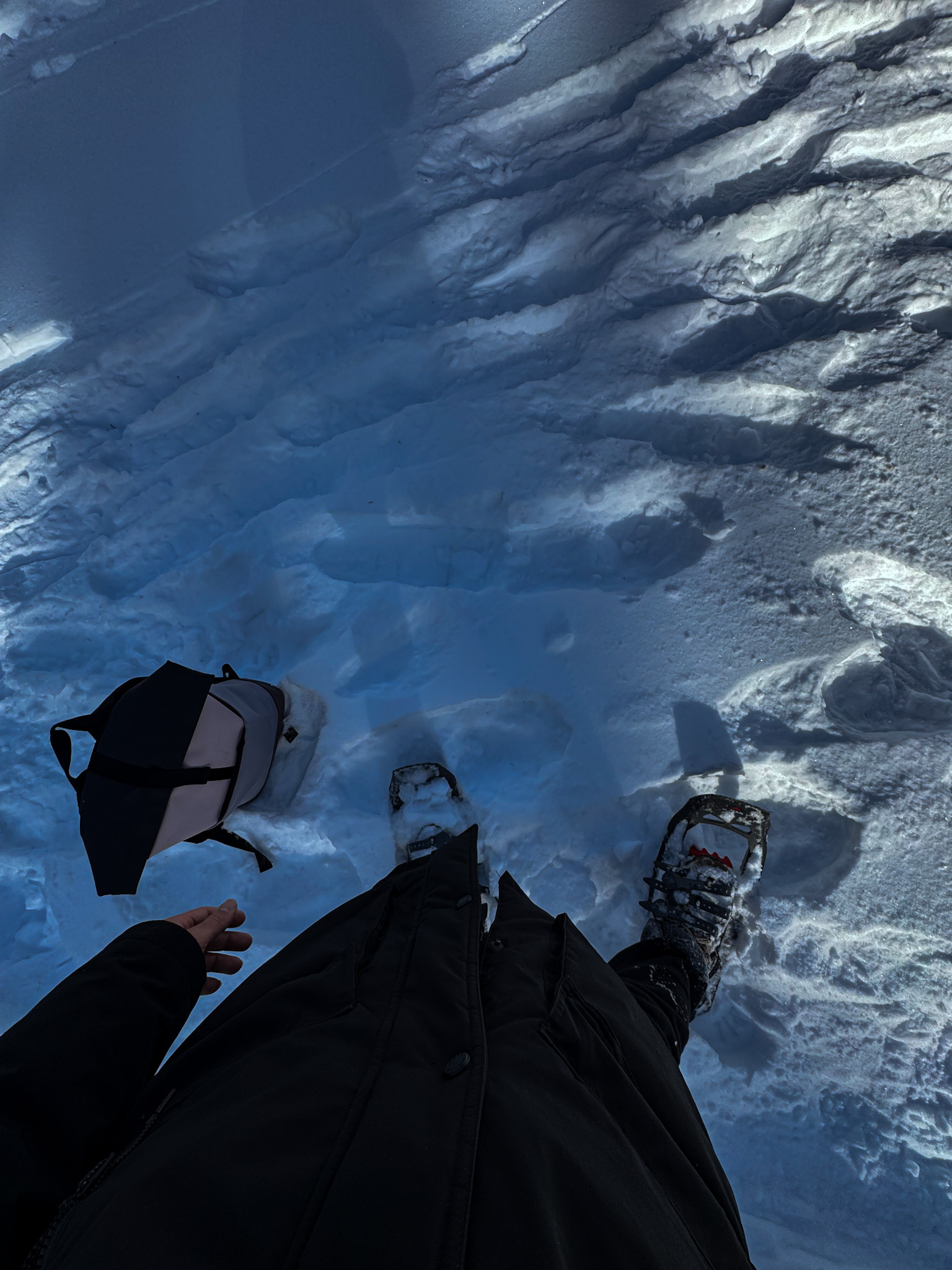
• Snowshoeing and winter hiking
• Paradise is typically the only accessible area
• Chains often required; frequent road closures
Winter is ideal for snow lovers, not sightseeing road trips. Deep snow, limited daylight, and weather closures are normal.
Spring (May–June) — Transition Season
• Melting snow and emerging waterfalls
• Partial access depending on snowpack
• Many trails still covered in snow
Spring is a mix of winter and summer conditions. It’s quieter than summer but requires flexibility and realistic expectations about access.
Day 1: Paradise Area Highlights (Best for Short Trips)
Day 1: Seattle → Mount Rainier (Paradise)
Seattle → Mount Rainier: 2–3 hours depending on traffic
If you only have one day at Mount Rainier, this is the best route for first-time visitors.
Paradise Area Highlights (Best for Short Trips)
If you only have one day, focus on the Paradise area. It gives you the most iconic Mount Rainier views with minimal driving.
Stop 1: Henry M. Jackson Memorial Visitor Center (Paradise)
This is the main hub of the park and one of the most scenic starting points. Even if you don’t hike far, the views from here are incredible.
• Great first stop
• Restrooms + visitor info
• Best base for short hikes
Stop 2: Nisqually Vista Trail (Easy + Beginner Friendly)
Right next to the visitor center, this short loop is perfect if:
• You’re short on time
• Visiting in winter
• Traveling with family
• Want mountain views without a long hike
In winter, this becomes one of the safest and most accessible snow routes in the park.
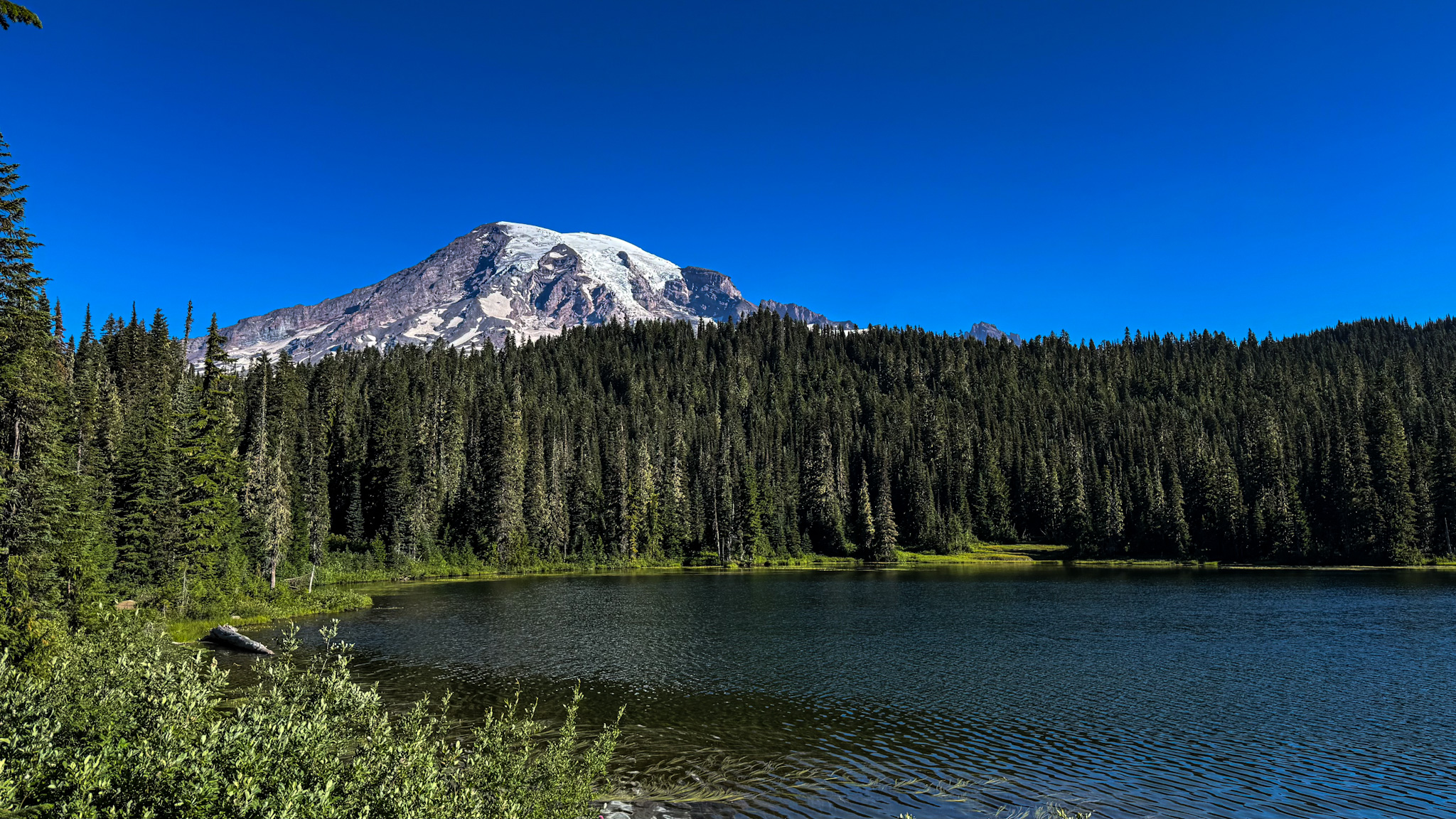
Optional (Summer Only): Reflection Lake
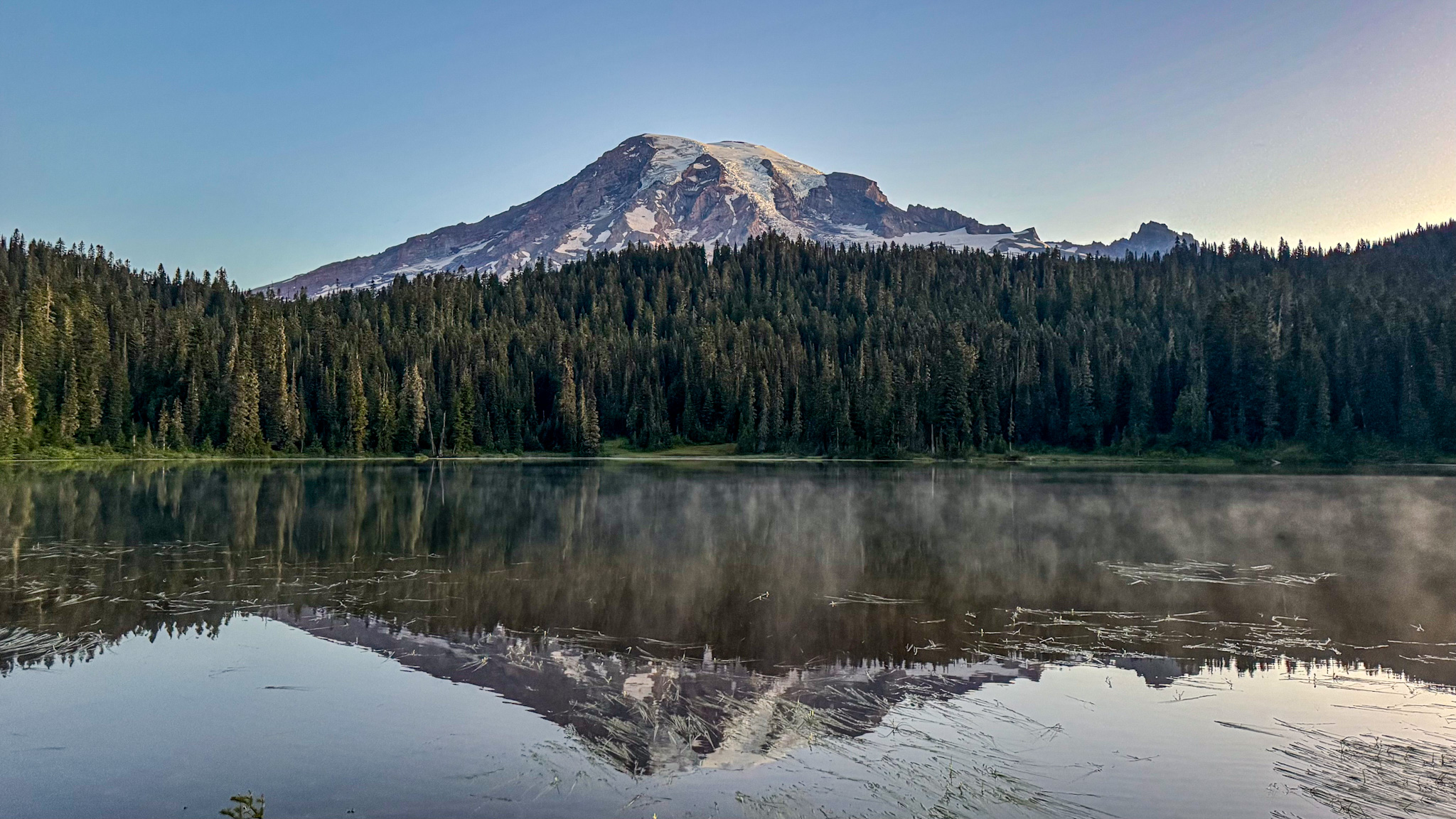
If Stevens Canyon Road is open, stop at Reflection Lake for one of the most photographed views of Mount Rainier. Early morning or sunset is best.
I arrived at Reflection Lake around 6:15am in May, and by 7am the parking area was already filling up. When I visited in July, cars were lining the road before 9:30am near Paradise.
Where to Stay (Night 1)
Cougar Rock Campground is the most convenient base for the Paradise area. It keeps driving minimal and works great for RV travelers.

Day 2: Reflection Lake + Stevens Canyon + Transition to Sunrise
Day 2: Reflection Lake → Sunrise (Stevens Canyon Road)
Reflection Lake -> Sunrise 1.5-2 hours
Sunrise at Reflection Lake (If You Missed It Day 1)
Morning light here can be incredible, especially in summer.
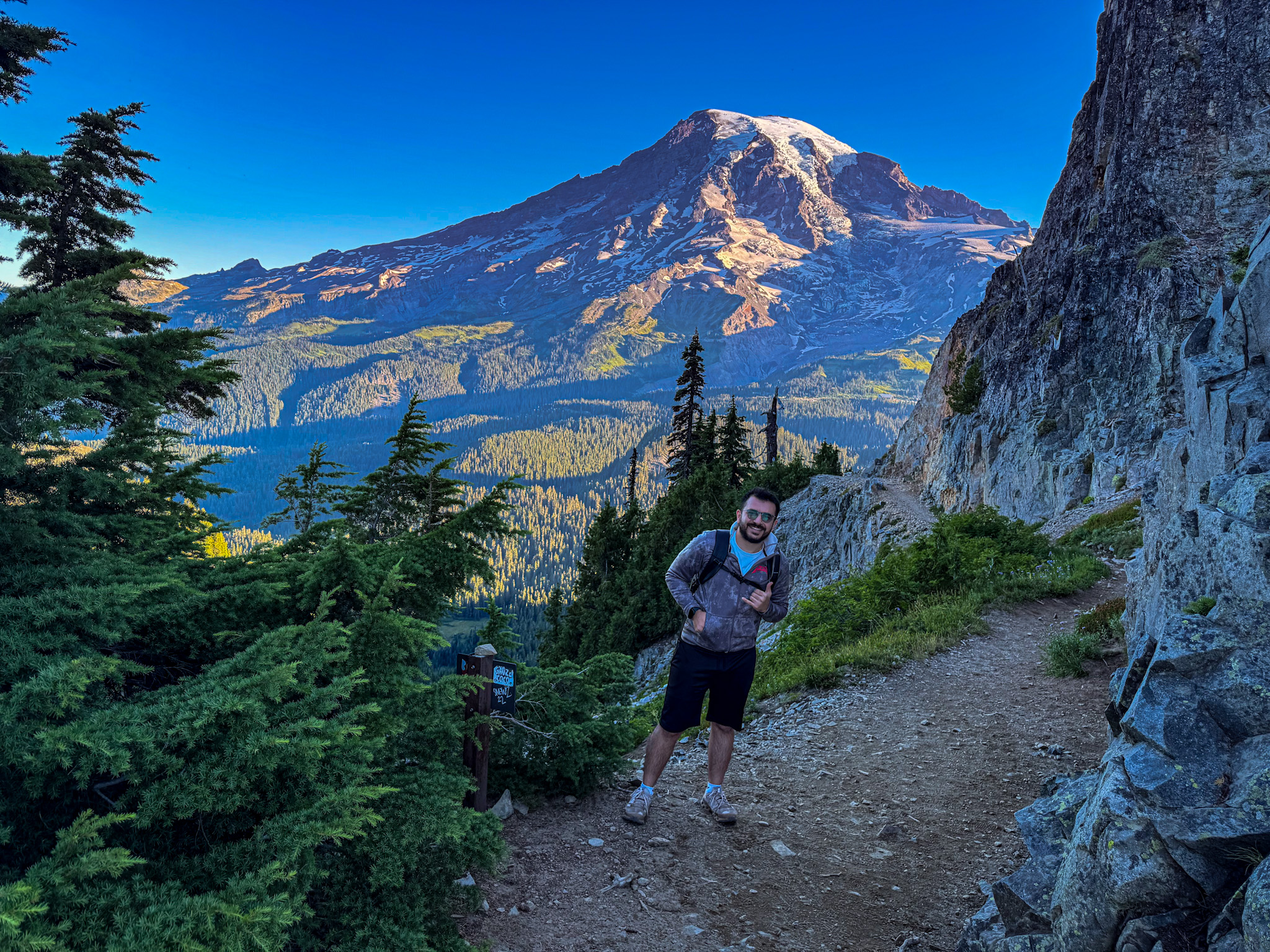
Pinnacle Peak Trail (Moderate, Short but Rewarding)
This is one of the best short hikes in the park.
Why I like it:
• Not too long
• Elevated viewpoint
• Different angle of Mount Rainier
• On clear days you can see Mount Baker
It feels close to the mountain, but still wide and panoramic.
Drive Stevens Canyon Road
This scenic drive connects Paradise to the eastern side of the park.
Expect:
• Pullouts with viewpoints
• Quick photo stops
• Changing landscape
If open (typically summer only), this road is worth the drive.
Where to Stay (Night 2)
White River Campground is ideal if you plan to explore Sunrise the next morning.
Day 3: Sunrise Area (Alpine + Bigger Views)
Day 3: Sunrise → Seattle
Sunrise -> Seattle 2.5-3 hours
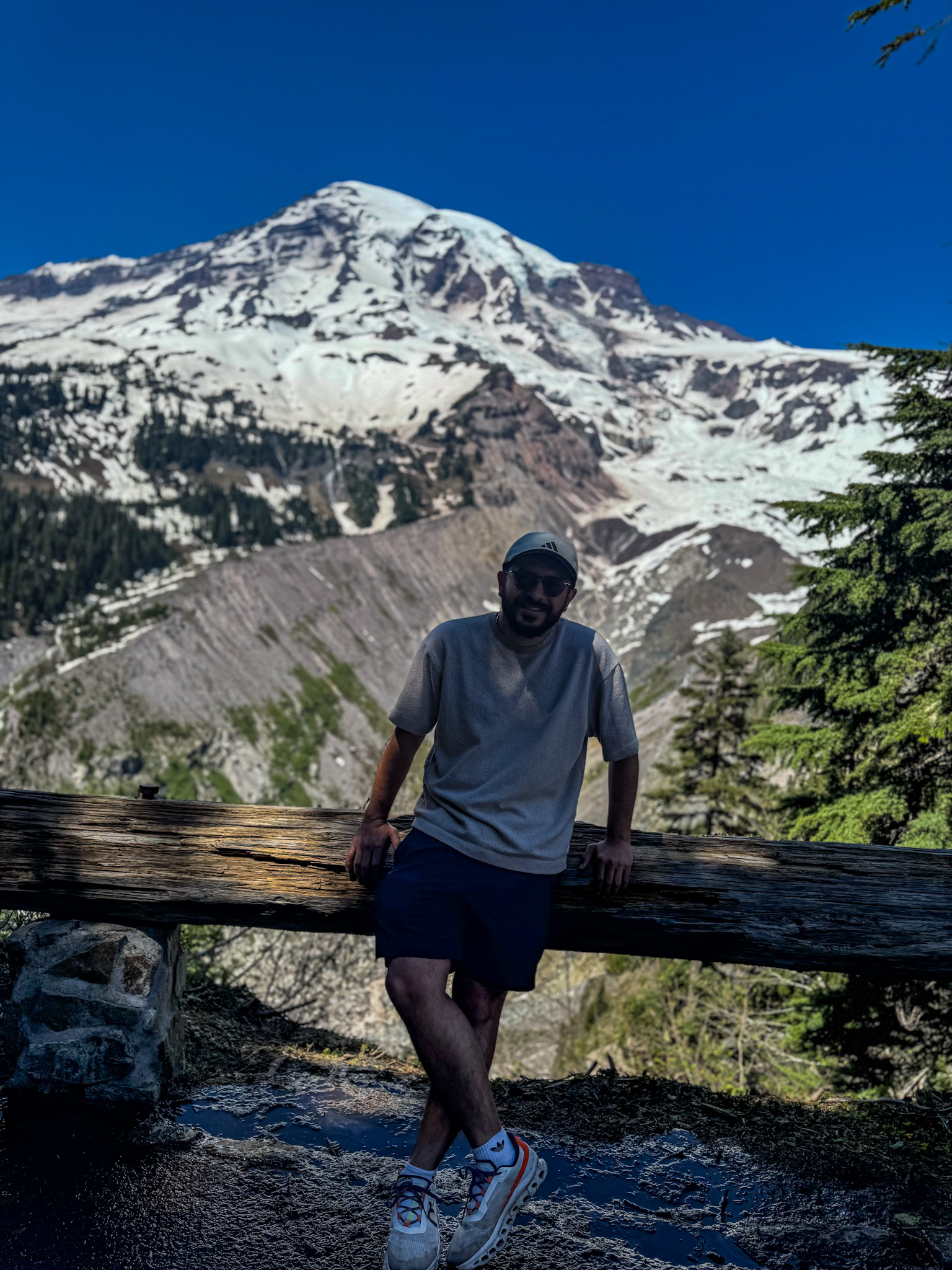
Sunrise is higher elevation and feels more open and rugged compared to Paradise.
This area offers some of the best panoramic hiking in the park.
Option 1: Mount Fremont Lookout
• Iconic fire lookout
• Wide glacier views
• Moderate difficulty
• One of the most photographed trails
Option 2: Burroughs Mountain Trail
• More challenging
• Close-up glacier views
• Dramatic alpine terrain
If you want something less crowded than Paradise, Sunrise often feels more spacious.
Things I Wish I Knew Before Visiting Yellowstone National Park
Things I Wish I Knew Before Visiting Yellowstone National Park Yellowstone was one of those…
4 Days in Yellowstone Without Campsite Reservations: Our Real Route
Grand Teton 2-Day Itinerary (2026) + Free Camping
Grand Teton 2-Day Itinerary (2026) + Free Camping I am writing this while I am…
Entrance Fees & Passes
Entrance Fees for Mount Rainier National Park
• $30 per vehicle (valid for 7 days)
• $25 per motorcycle
• $15 per person (walk-in / bike)
• America the Beautiful Pass accepted
Important: Road & Seasonal Access
Mount Rainier changes dramatically by season.
• Paradise is open year-round (weather dependent)
• Sunrise typically opens late June / July
• Stevens Canyon Road is seasonal
• Snow can remain even in summer
Always check the official Mount Rainier road status page before driving.
In winter:
• Microspikes are highly recommended
• Chains may be required
• Sunrise is closed
Where to Stay Near Mount Rainier (Camping & Lodging Options)
Staying Near Paradise
🏕 Cougar Rock Campground (Inside the Park)
Best for: Paradise access
Distance to Paradise: ~10 minutes
• RV-friendly (limited size)
• Tent camping
• Close to Nisqually Vista + Paradise area
• Typically open late May–September
This is the most convenient campground if you’re following the 1-day or 2-day Paradise itinerary.
🏕 Ohanapecosh Campground (Inside the Park)
Best for: Forest + quieter setting
Distance to Paradise: ~45 minutes
• Large campground
• RV and tent sites
• More peaceful than Cougar Rock
Good option if you want trees and waterfalls instead of open alpine meadows.
Staying Near Sunrise
Sunrise is on the northeast side of the park and seasonal.
🏕 White River Campground (Inside the Park)
Best for: Sunrise access
Distance to Sunrise: ~15 minutes
• Tent-only campground (important)
• No RV hookups
• Higher elevation
• Open seasonally (usually July–September)
If you want minimal driving before hiking Mt. Fremont Lookout or Burroughs Mountain, this is the best base.
What to Pack
Essentials year-round
• Plenty of water
• Snacks or meals
• Offline maps
• Sunscreen + hat
Footwear & safety
• Hiking shoes with traction
• Microspikes (fall–spring)
• Trekking poles (optional)
Weather layers
• Waterproof jacket
• Warm layer (even in summer)
FAQ
How many days do you need for Mount Rainier National Park?
Most visitors need 2 days to see Mount Rainier without rushing.
• 1 day is enough for Paradise highlights
• 2 days allows time for Paradise and Stevens Canyon Road
• 3 days is ideal to include Sunrise and longer hikes
Can you visit Mount Rainier in one day from Seattle?
Yes, Mount Rainier is a popular day trip from Seattle, about 2–3 hours each way.
If you only have one day, focus on the Paradise area and arrive early to avoid long entrance lines.
What is the best area to visit in Mount Rainier for first-time visitors?
Paradise is the best area for first-time visitors.
It offers:
• Iconic mountain views
• Short, beginner-friendly trails
• Visitor center access
• Year-round road access (weather permitting)
When is the best time to visit Mount Rainier?
The best time to visit Mount Rainier is July through September.
During summer:
• Roads and trails are fully open
• Wildflowers bloom (late July–early August)
• Visibility is most reliable
Is Mount Rainier open year-round?
Yes, Mount Rainier National Park is open year-round, but access varies by season.
• Paradise: Open year-round (weather dependent)
• Sunrise: Seasonal, usually late June to September
• Stevens Canyon Road: Summer only
Always check road conditions before visiting.
Is cell service available inside Mount Rainier National Park?
Cell service is limited to nonexistent in most areas of the park.
Download maps, trail info, and road updates before arriving.
Do you need reservations to visit Mount Rainier?
No reservations or timed entry permits are required to enter Mount Rainier.
However, summer weekends and holidays can have long wait times, especially after 10 a.m.