4 Days in Yellowstone Without Campsite Reservations: Our Real Route
We visited Yellowstone in July 2026 while traveling full-time in our RV. We entered from Grand Teton with no Yellowstone campsite reserved, planned to see only Grand Prismatic Spring and Old Faithful, and ended up staying four days after realizing how much we would miss.
The short answer: You can visit Yellowstone without an in-park campsite reservation, but you still need a legal place to sleep. We used two developed campgrounds outside the East and Northeast entrances—Threemile Campground and Soda Butte Campground—and changed our route as we went. This guide shows our real four-day route, where we stayed, hotel alternatives, hikes that fit the itinerary, and what we would do differently.
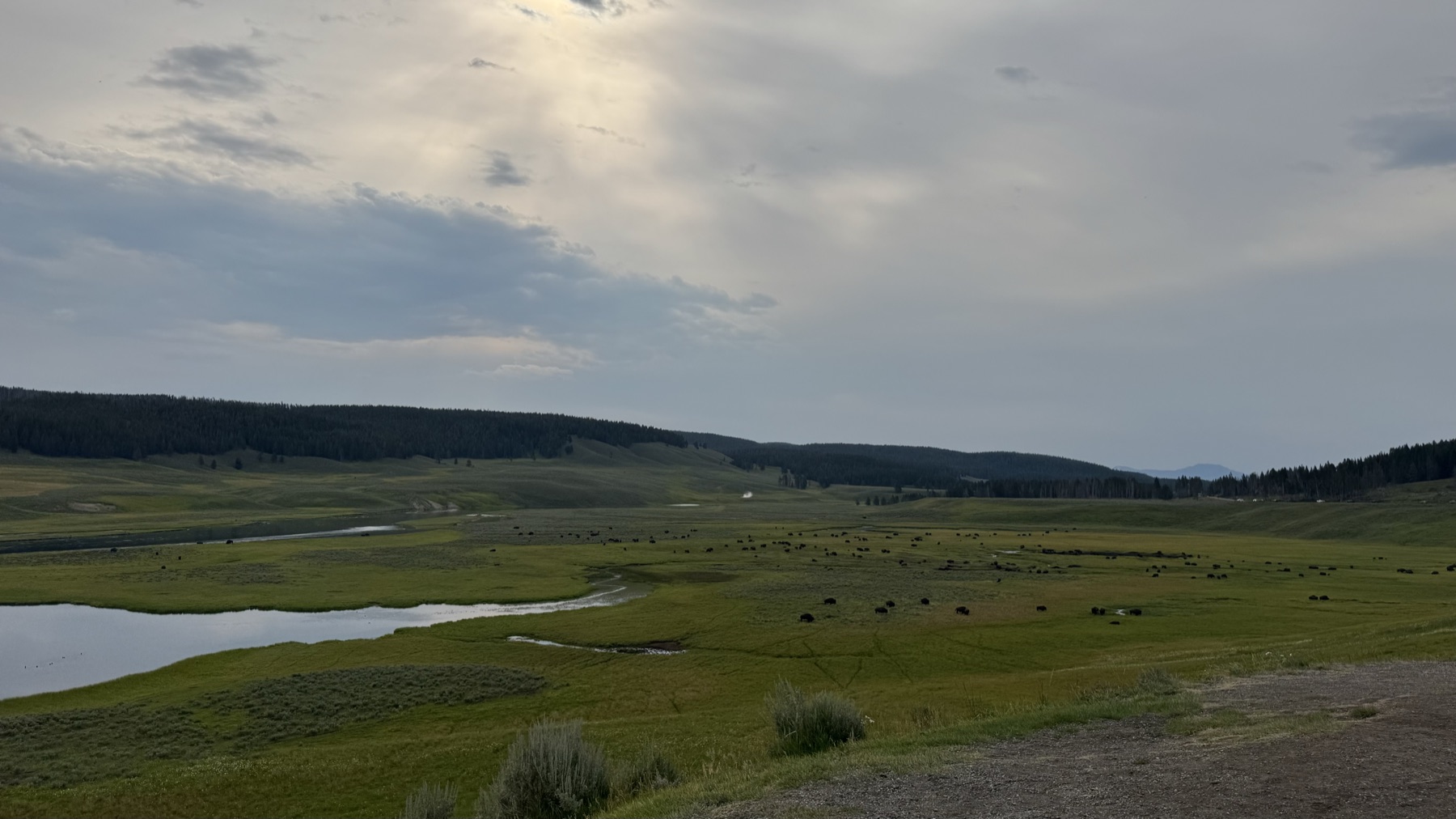
Table of Contents
- Our 4-day Yellowstone route and map
- Day 1: Grand Prismatic, Old Faithful and Threemile
- Day 2: Canyon Village, Lower Falls and Lamar Valley
- Day 3: Lamar Valley and wildlife
- Day 4: Mammoth Hot Springs and the North Entrance
- Where to stay: campgrounds, hotels and gateway towns
- Hikes that fit this itinerary
- Planning and safety tips
- Frequently asked questions
Our 4-Day Yellowstone Route and Map
Our route crossed several very different parts of Yellowstone. It worked because we were flexible, but it also involved long driving days. Yellowstone has five entrances, and it can take hours to move between regions. Download the official Yellowstone map before your trip and check the live park road status before committing to this route.
| Day | Route and main stops | Where we slept |
|---|---|---|
| 1 | Grand Teton → South Entrance → Grand Prismatic → Old Faithful → East Entrance | Threemile Campground |
| 2 | East Entrance → Yellowstone Lake area → Canyon Village and Lower Falls → Lamar Valley → Northeast Entrance | Soda Butte Campground |
| 3 | Lamar Valley and the northeast side of Yellowstone | Second night at Soda Butte |
| 4 | Northern Yellowstone → Mammoth Hot Springs → North Entrance | Exited near Gardiner |
Route order: South Entrance → Grand Prismatic Spring → Old Faithful → East Entrance/Threemile → Canyon Village/Lower Falls → Lamar Valley → Northeast Entrance/Soda Butte → Mammoth Hot Springs → North Entrance.
If you want to estimate the driving before copying our route, use the drive time and distance calculator or build a customized version with the road trip itinerary planner.
Day 1: Grand Prismatic Spring, Old Faithful and Threemile Campground
We entered Yellowstone through the South Entrance after our two-day trip in Grand Teton National Park. This is the natural entrance when driving north from Jackson or Grand Teton, but seasonal road openings can affect access.
Grand Prismatic Spring
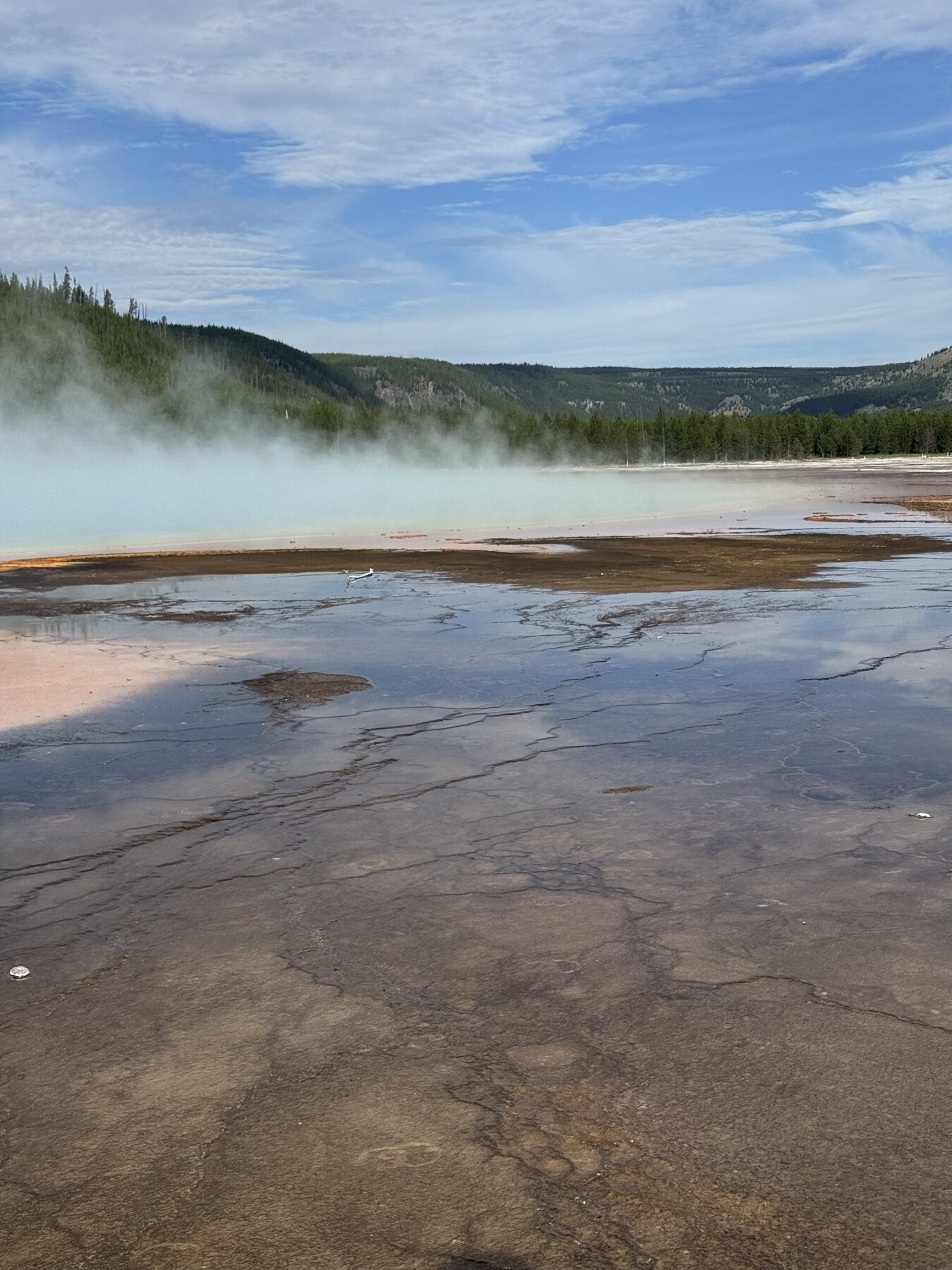
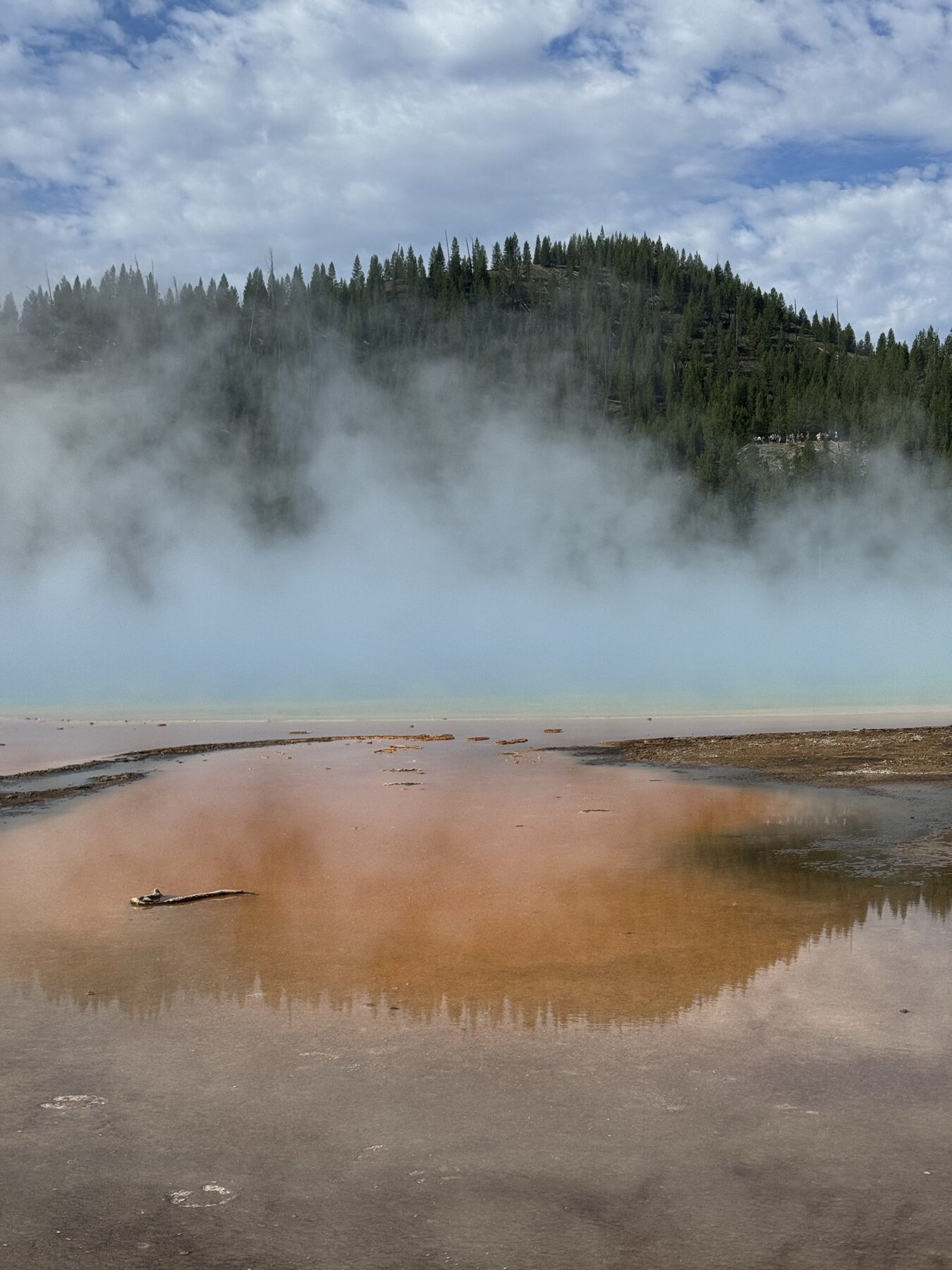
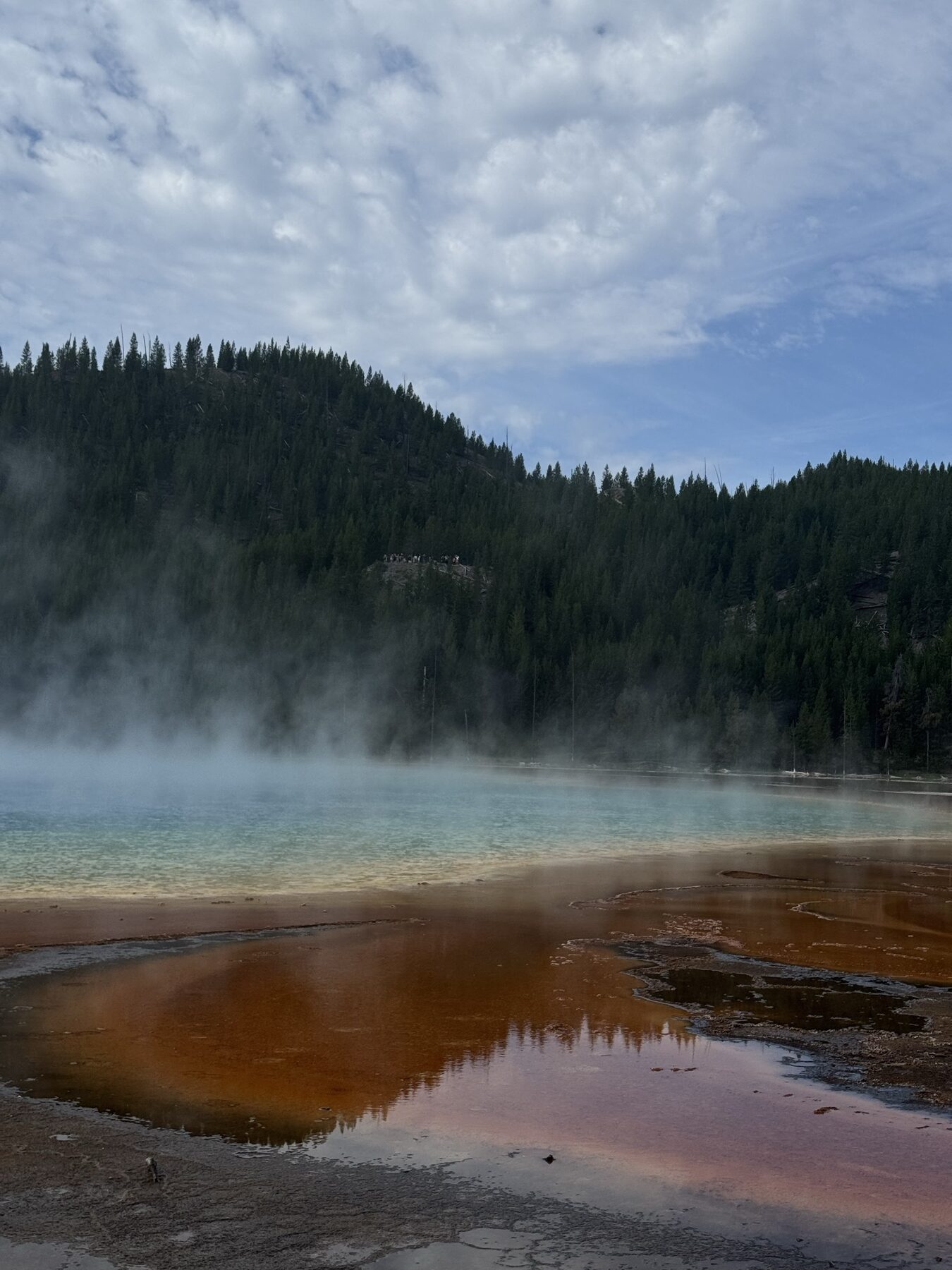
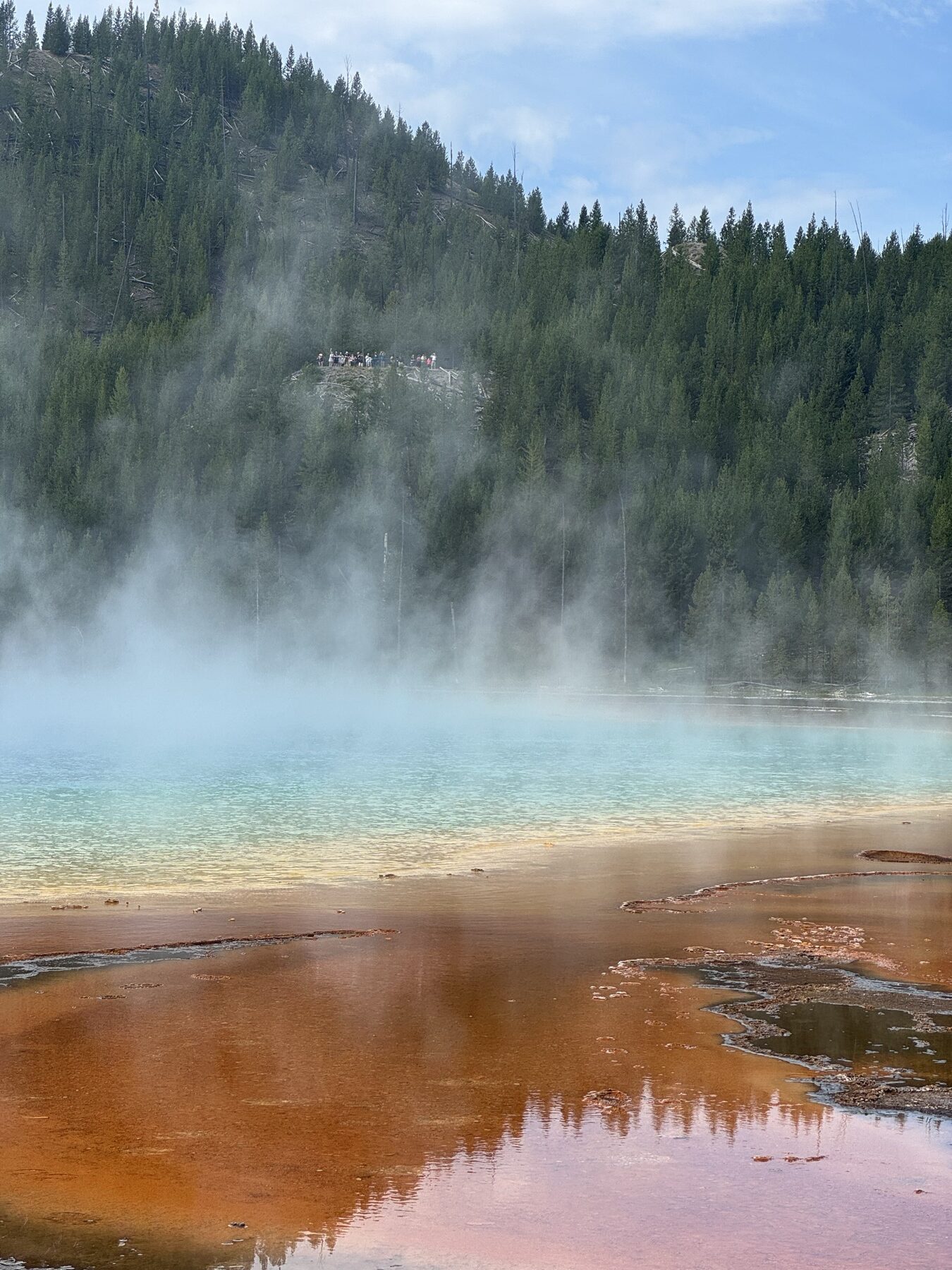
Grand Prismatic Spring was our first major stop. The colors, steam and scale are difficult to understand until you see them in person. The Midway Geyser Basin boardwalk gives a close view; the Grand Prismatic Overlook on the Fairy Falls route gives the elevated view people often recognize from photographs. Stay on the boardwalks—ground that looks solid can be a thin crust over dangerously hot water.
Old Faithful and the Upper Geyser Basin
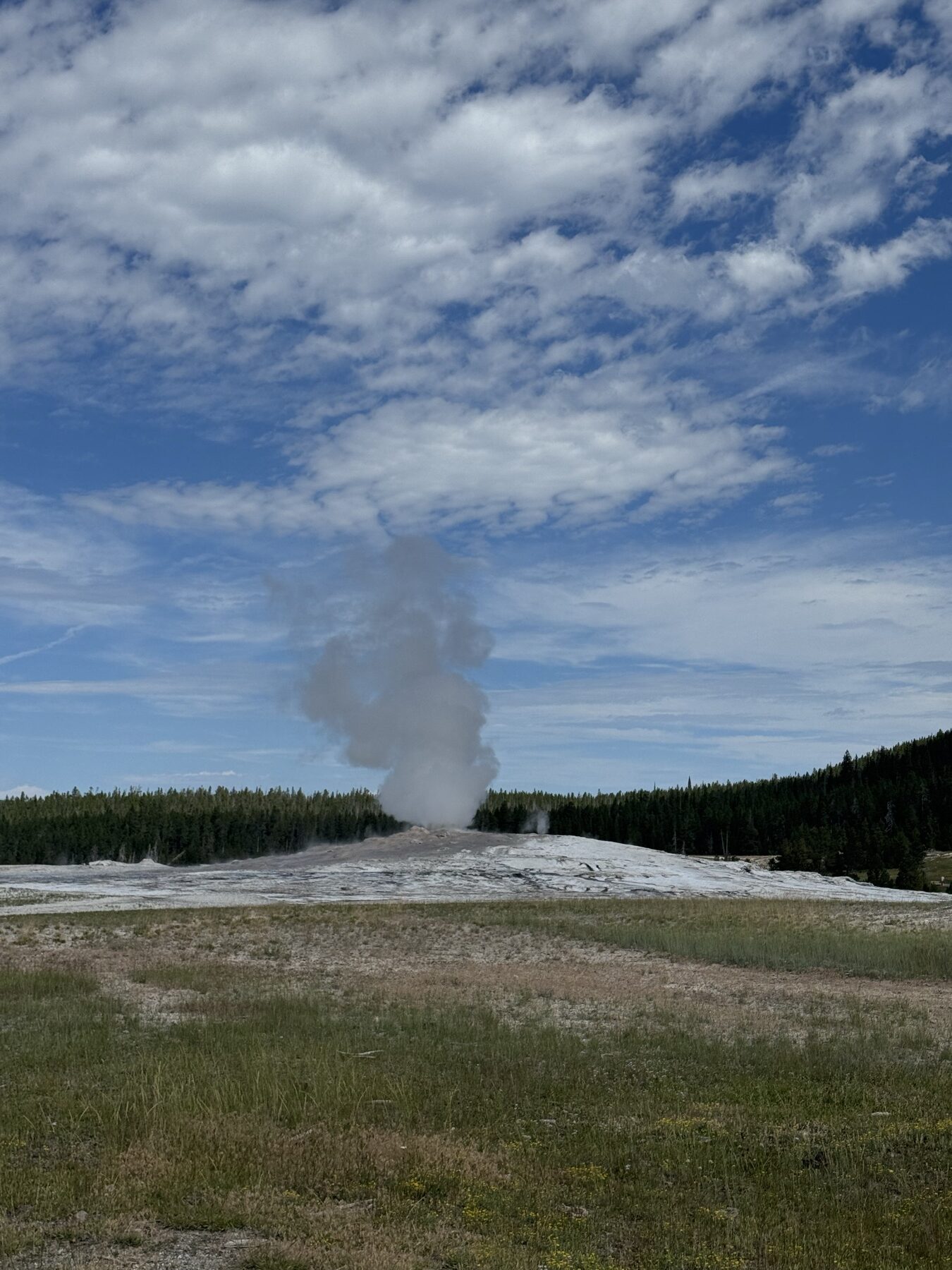
Old Faithful was our second stop. Before the trip, I thought Grand Prismatic and Old Faithful would be enough for Yellowstone. They are famous for a reason, but they are only a small part of the park. Arrive with enough time to check the posted eruption estimate, then walk part of the Upper Geyser Basin boardwalk instead of watching one eruption and immediately leaving.
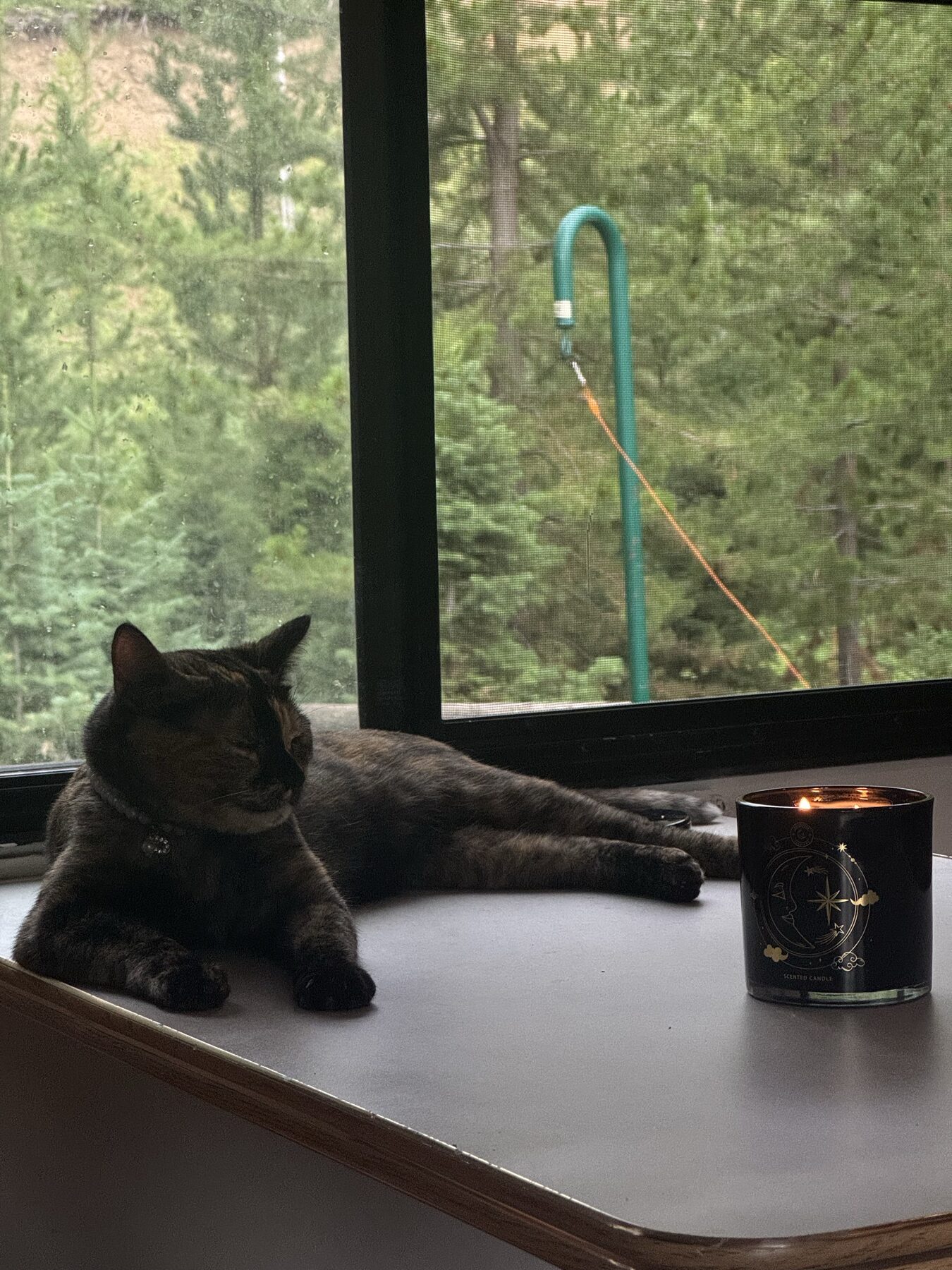
Where we stayed: Threemile Campground
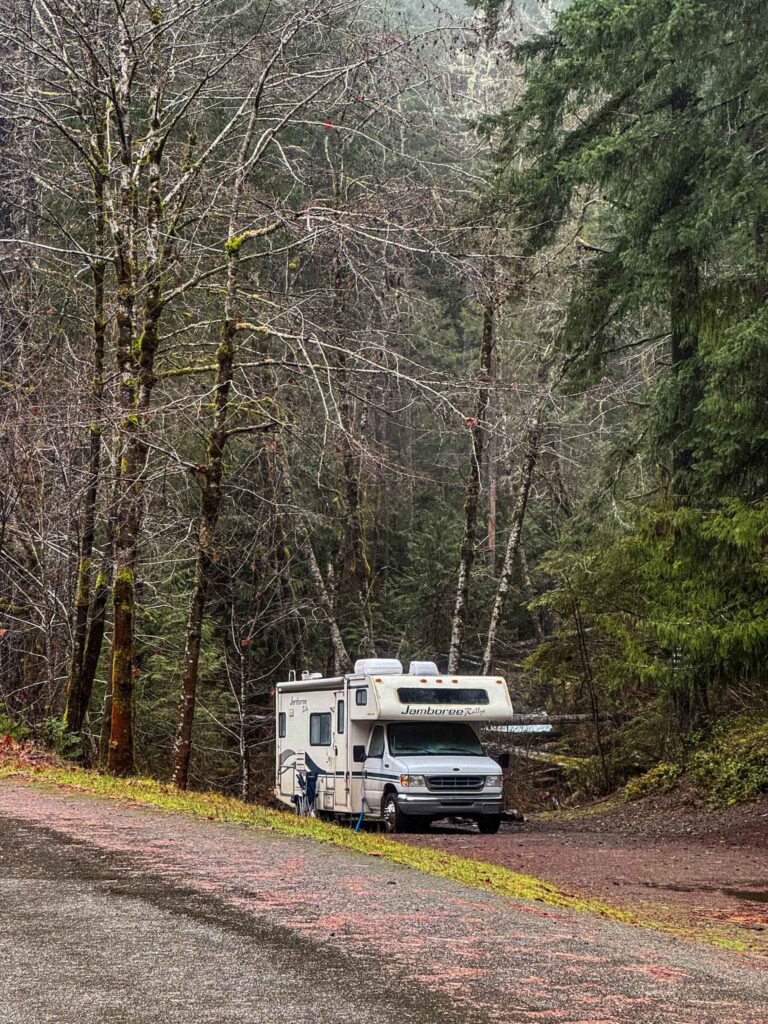
After meeting another traveler in Grand Teton and hearing what we would miss, we extended our stay and drove across Yellowstone to Threemile Campground in Shoshone National Forest. It is approximately three miles outside the East Entrance on the road toward Cody—not near the South Entrance. This was a long drive after Old Faithful, but it gave us a legal place to sleep without an in-park reservation.
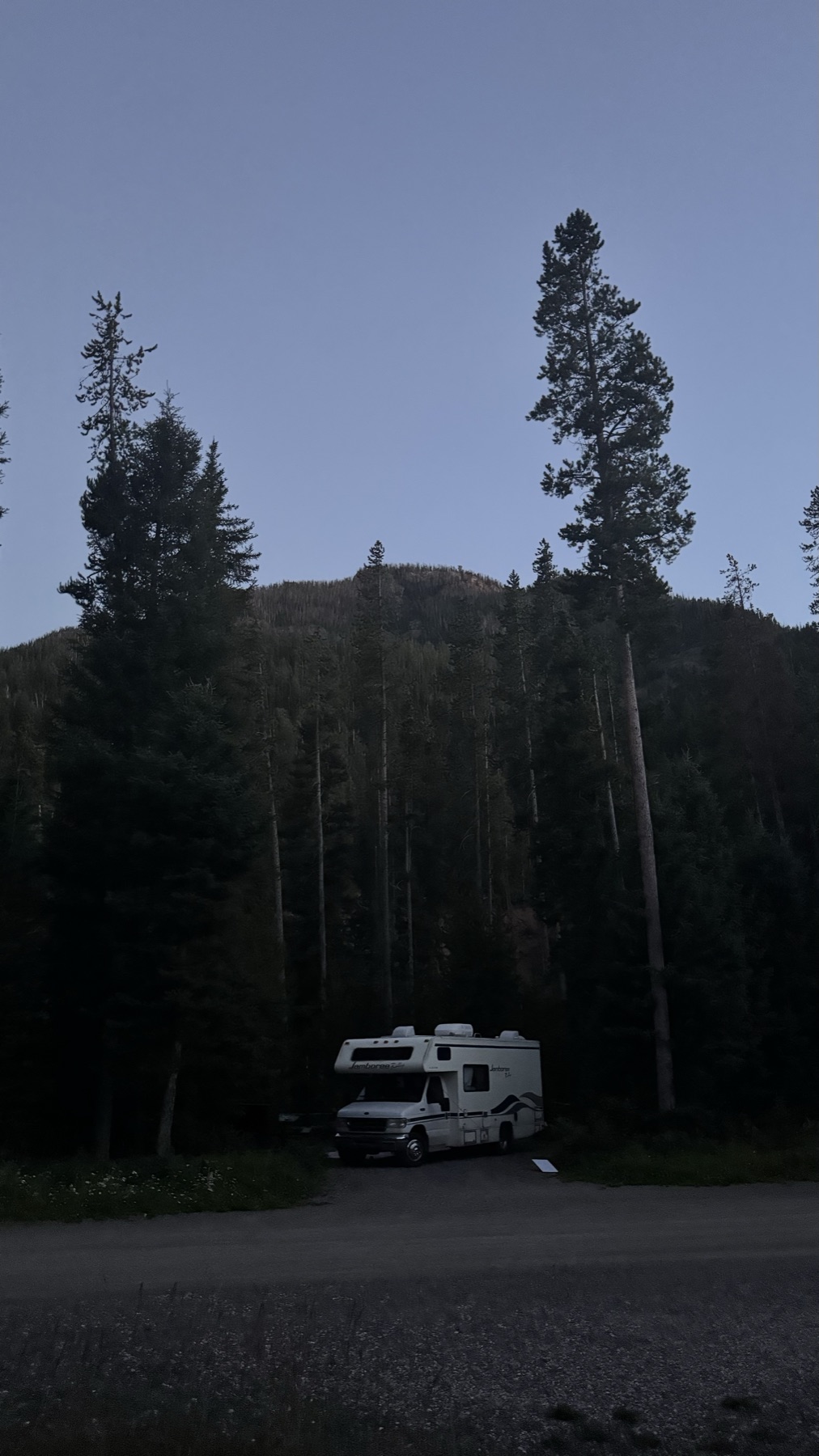
- About three miles outside Yellowstone’s East Entrance
- Developed campground in Shoshone National Forest
- Hard-sided trailers and RVs are required because of bear activity
- No hookups and no dependable cell service
- Sites, rules and reservation status can change
Check the official Threemile Campground listing before relying on it. Do not arrive with a tent or assume an unreserved site will be available simply because our trip worked out.
Day 2: Canyon Village, Lower Falls and Lamar Valley
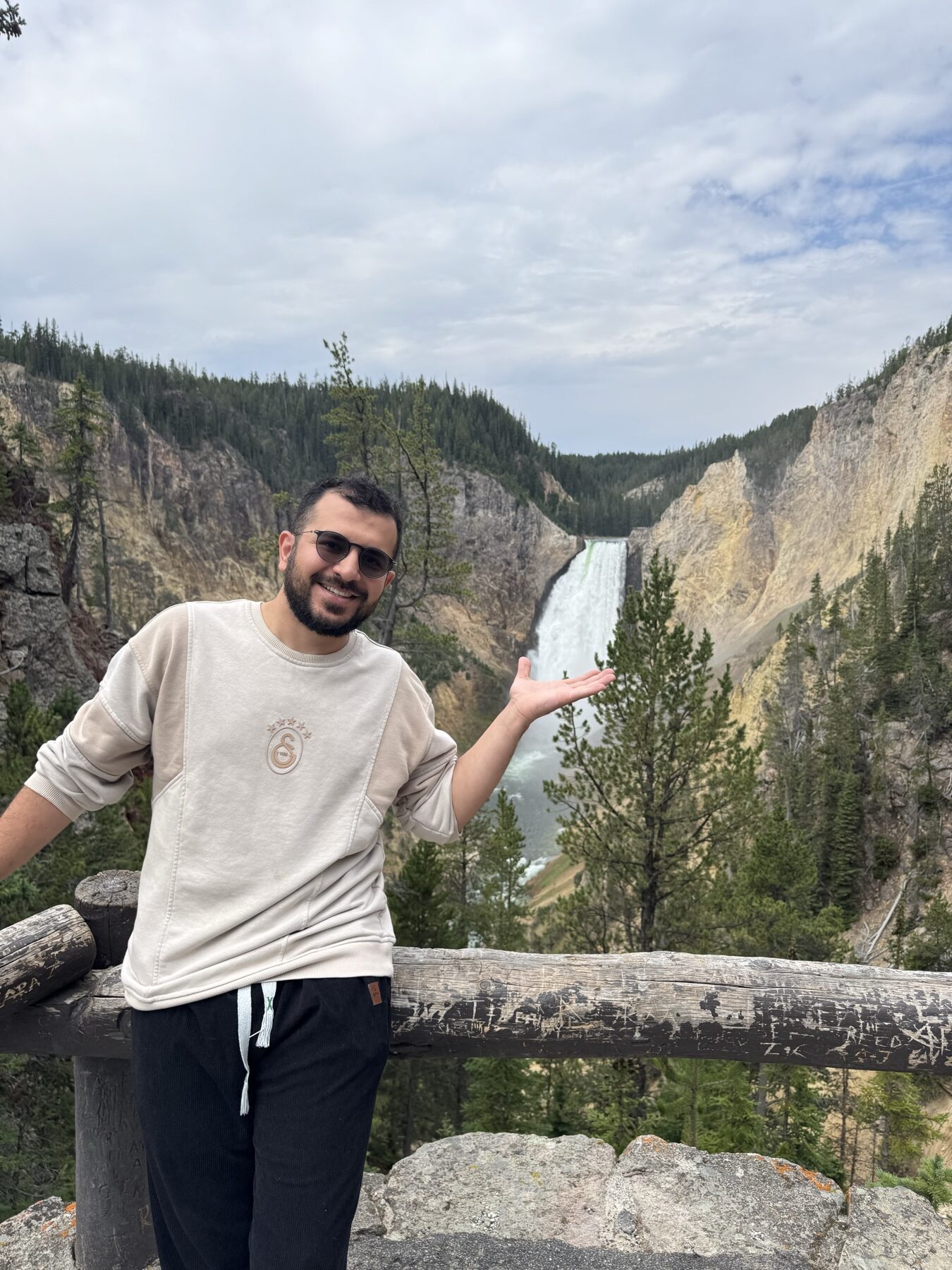
We re-entered through the East Entrance, passed the Yellowstone Lake area and continued toward Canyon Village. The Grand Canyon of the Yellowstone and 308-foot Lower Falls made this day feel completely different from the geyser basins. Artist Point is the classic Lower Falls view; North Rim Drive offers Lookout Point and the steep Brink of the Lower Falls trail.
Lamar Valley and our first major bison sightings
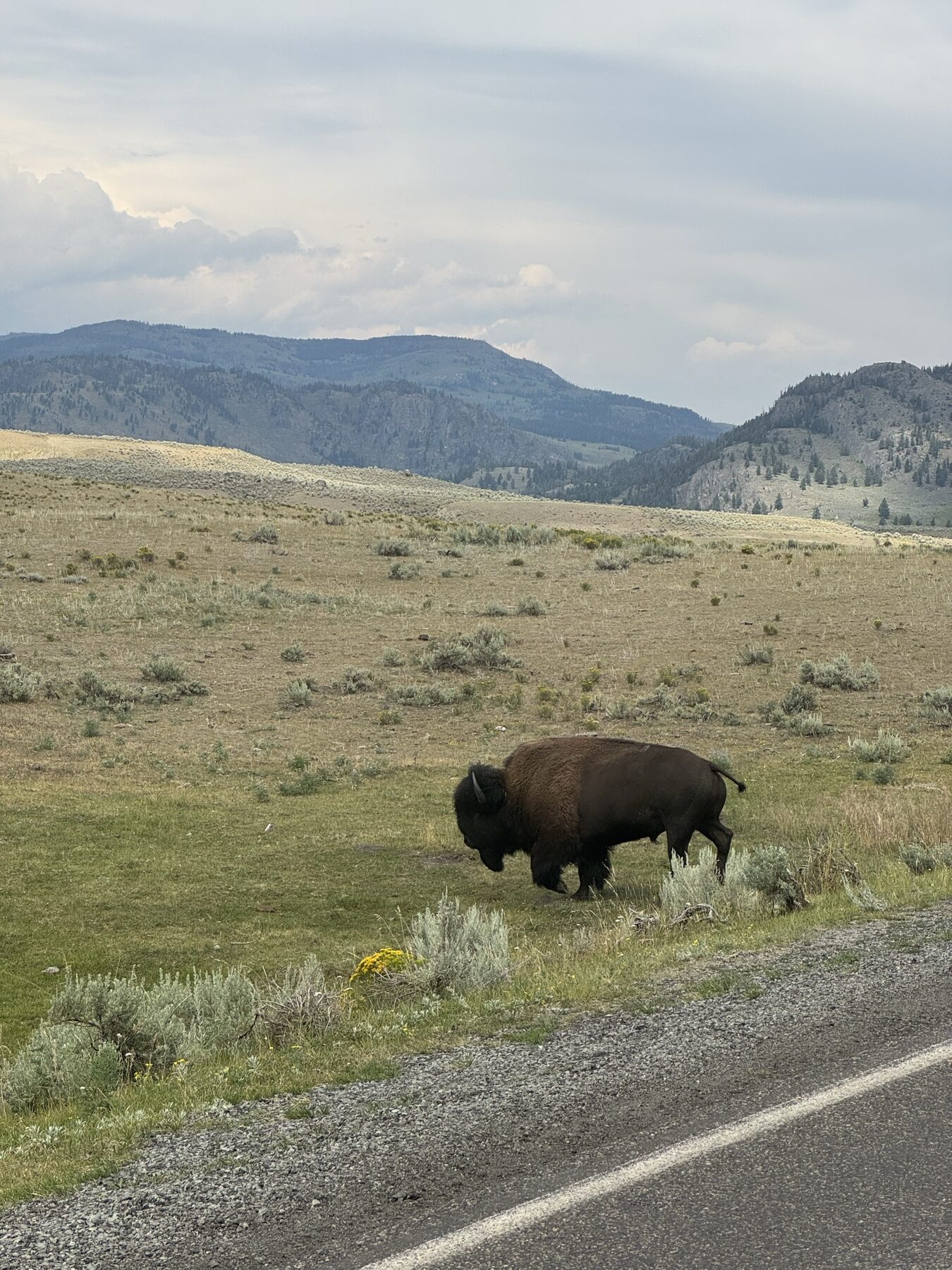
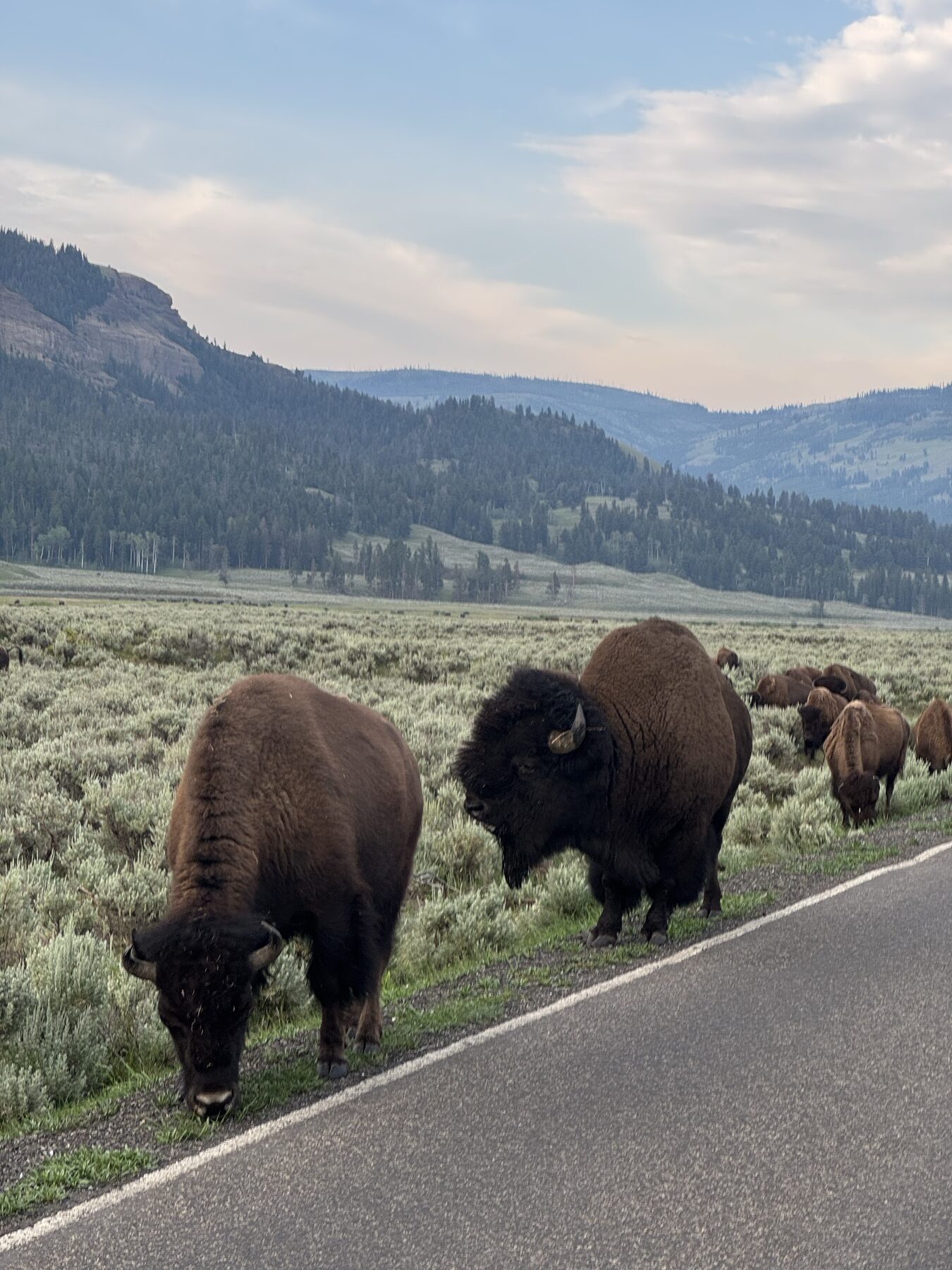
From Canyon Village we continued toward the northeastern part of the park and Lamar Valley. This was when Yellowstone became much more than geysers for us. We saw large numbers of bison near and on the roadway. A “bison jam” can stop traffic completely, so leave extra time and never build a schedule that depends on perfect driving conditions.
Lamar Valley is one of the best parts of this route for wildlife and wide-open scenery. Pull over only where your vehicle can be completely off the road. Use binoculars or a zoom lens and stay inside the vehicle when animals are close.
Where we stayed: Soda Butte Campground
We left through the Northeast Entrance and stayed at Soda Butte Campground, about one mile east of Cooke City, Montana. This kept us close to Lamar Valley and allowed us to spend another day on the northeastern side instead of driving across the park again.
- Outside Yellowstone near Cooke City and the Northeast Entrance
- 27 sites in the current official listing
- Hard-sided camping only—no tent camping
- First-come, first-served rather than reservable
- Weather-dependent summer season
- Can fill on weekends and holidays; arrive early and keep a backup
Verify dates, restrictions and facility status on the official Soda Butte Campground page before your trip.
Day 3: An Extra Day in Lamar Valley
We stayed a second night at Soda Butte. That extra day gave us room to watch wildlife and explore without rushing toward another famous attraction. It was one of the best decisions of the trip.
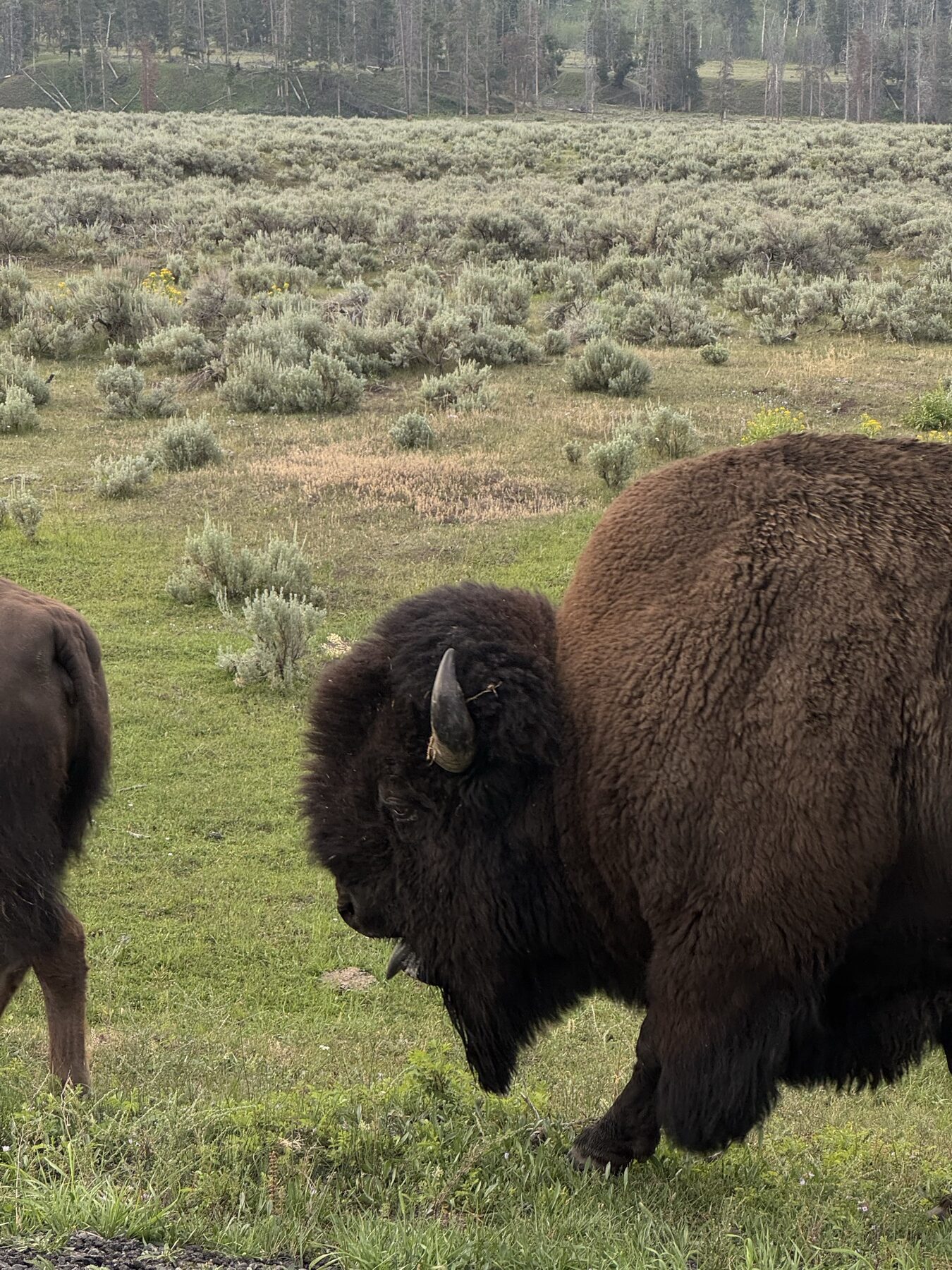
Wildlife, traffic, weather, parking and road work can change a Yellowstone schedule quickly. For wildlife viewing, start early or stay into the evening, bring binoculars and warm layers, and expect limited cell service. Sightings are never guaranteed; the valley itself is worth the drive.
Day 4: Mammoth Hot Springs and the North Entrance
On our final day, we crossed northern Yellowstone and stopped at Mammoth Hot Springs before leaving through the North Entrance near Gardiner. The travertine terraces felt completely different from Grand Prismatic Spring and Old Faithful and made a memorable final stop.
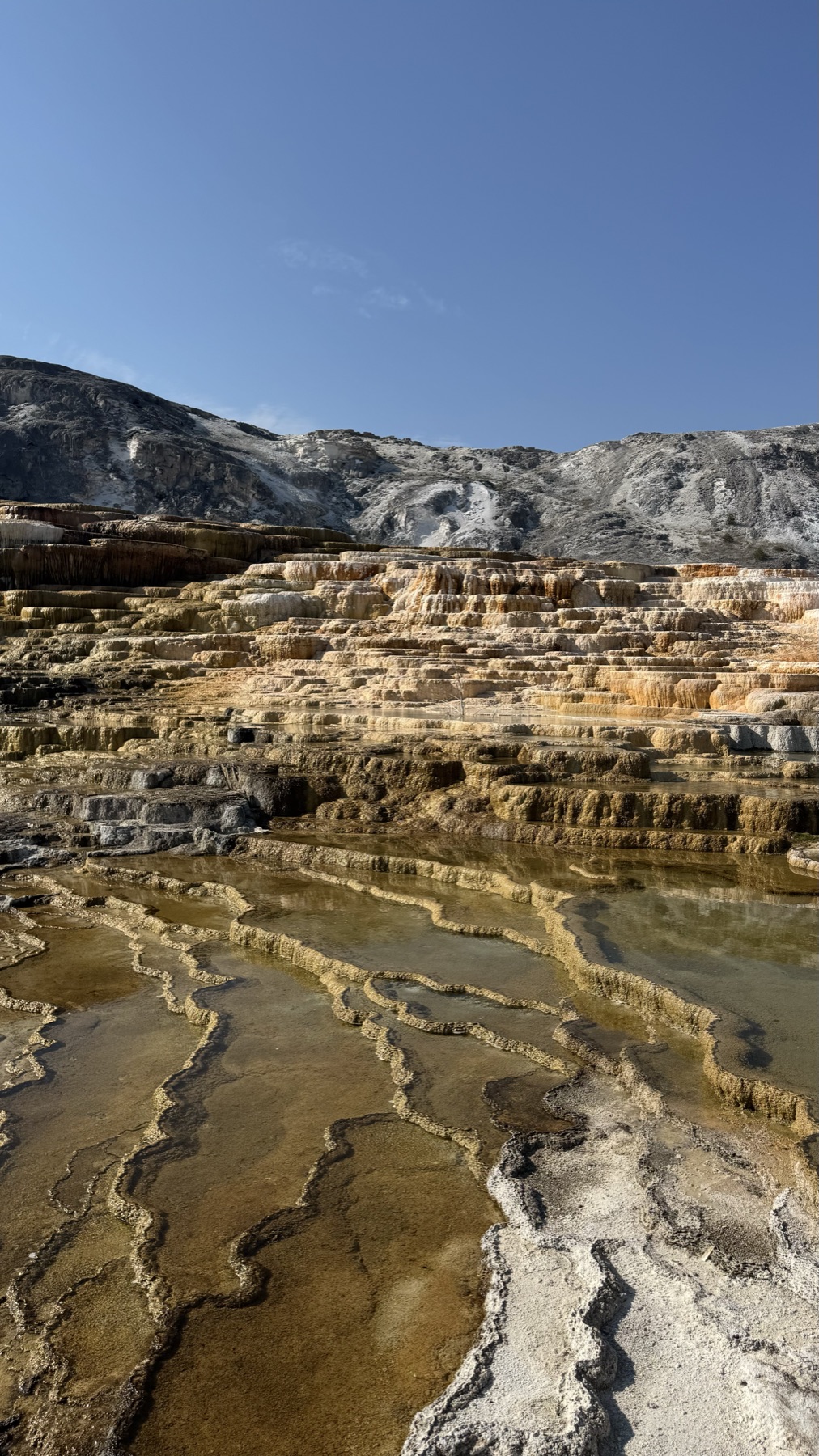
Walk the Lower Terraces boardwalk if time allows. In summer, the one-mile Upper Terrace Drive offers additional views, but RVs and vehicles towing trailers are not permitted on that steep, narrow loop. If you have another night, Gardiner is the most convenient hotel base for Mammoth and the North Entrance.
Where to Stay in Yellowstone: Camping, Hotels and Gateway Towns
Can you visit without a campsite reservation?
Yes—but “no reservation” does not mean sleeping wherever you find space. The National Park Service does not allow car camping or overnight vehicle parking in pullouts, parking areas, picnic grounds or other undesignated places. You need a designated campground, hotel, cabin or another legal overnight location.
Yellowstone currently lists 11 developed campgrounds with more than 2,000 sites. Most require advance reservations and can fill far ahead. Check the official Yellowstone camping page because opening dates, fees and reservation systems change.
Best in-park bases
| Base | Best for | Main tradeoff |
|---|---|---|
| Old Faithful area | Geysers, Upper Geyser Basin and an early Old Faithful start | Far from Lamar Valley and Mammoth |
| Canyon Village | Lower Falls, canyon overlooks and a relatively central base | Popular and often expensive |
| Lake or Grant Village | South/East Entrance routes, Yellowstone Lake and Grand Teton connections | Long drive to the northern range |
| Mammoth Hot Springs | North Entrance, terraces and northern Yellowstone | Long drive to Old Faithful |
| Roosevelt area | Lamar Valley and the northeast | Rustic and short seasonal availability |
Hotels outside Yellowstone
- Gardiner, Montana: best for the North Entrance and Mammoth Hot Springs.
- West Yellowstone, Montana: the largest selection of restaurants and lodging near the West Entrance; useful for geyser-basin days.
- Cooke City or Silver Gate, Montana: best for Lamar Valley and the Northeast Entrance, but with fewer rooms and services.
- Cody, Wyoming: useful before or after the East Entrance; too far away to treat as a convenient base for the whole park.
- Jackson or Grand Teton: good before entering from the south, but not practical for repeated Yellowstone day trips.
In-park lodging fills quickly, so book early through the authorized operator and verify cancellation policies. See the official Yellowstone lodging guide for locations and operating seasons. If you are dividing a longer drive before reaching the park, the overnight stop planner can help choose a sensible stopping point.
Hikes That Fit This 4-Day Yellowstone Itinerary
We did not complete every hike below, so I want to be transparent: these are practical additions to our driving route, not a claim that we personally hiked all of them. Trail conditions, bear activity, snow and closures change. Check the official Yellowstone hiking page or ask a ranger before starting.
| Walk or hike | Difficulty/time | Where it fits |
|---|---|---|
| Midway Geyser Basin boardwalk | Short, easy boardwalk | Day 1 at Grand Prismatic |
| Grand Prismatic Overlook + Fairy Falls | Moderate; the full Fairy Falls route is roughly 5.4 miles round trip from the southern trailhead | Day 1 if you start early and reduce other stops |
| Upper Geyser Basin boardwalks | Choose a short stroll or a longer geyser walk | Day 1 while waiting for Old Faithful |
| Canyon overlooks and rim paths | Easy overlooks to steep descents; Brink of Lower Falls is strenuous on the return | Day 2 near Canyon Village |
| Wraith Falls | Short 0.5-mile hike | Day 4 between Tower and Mammoth |
| Beaver Ponds Loop | Moderate 5-mile loop; bear country | Day 4 or an extra Mammoth day |
| Bunsen Peak | Moderately strenuous 4.6 miles with about 1,300 feet of climbing | Extra day near Mammoth |
For a first visit, I would prioritize the boardwalks, an elevated Grand Prismatic view, a few canyon overlooks and one moderate trail rather than trying to hike in every region. Yellowstone’s high elevation makes hikes feel harder, and afternoon weather can change quickly.
Yellowstone Planning and Safety Tips
- Check roads the same day you travel. GPS apps may not reflect closures, construction or seasonal gates.
- Download maps before entering. Cell service is limited and unreliable.
- Start early. Parking at Grand Prismatic, Old Faithful and popular canyon overlooks fills quickly.
- Do not underestimate driving. Wildlife jams, construction and 45 mph speed limits make drive times longer than a map suggests.
- Stay on thermal-area boardwalks. The surrounding crust can be dangerously thin.
- Keep wildlife distance. Stay at least 100 yards from bears, wolves and cougars and 25 yards from bison, elk and other animals.
- Carry bear spray on hikes and know how to use it. Keep it immediately accessible, not buried inside a backpack.
- Pack layers, rain gear, food and water. Yellowstone can feel cold even in summer and weather changes quickly.
- Keep a legal backup place to sleep. First-come campgrounds can fill; save phone numbers and hotel options before losing service.
Review the National Park Service’s current Yellowstone safety guidance before your trip.
What I would do differently next time
I would keep the same flexibility but reduce the end-of-day driving. If available, I would book one night near Old Faithful or Canyon and two nights near Lamar Valley or Mammoth. I would also begin each day earlier, choose one real hike in advance, and keep the final afternoon open for wildlife delays or a stop we discovered along the way.
Frequently Asked Questions
Is four days enough for Yellowstone?
Four days is enough for a strong first visit if you divide the park into regions and accept that you will not see everything. It allows time for the geyser basins, canyon, Lamar Valley and Mammoth without reducing Yellowstone to one rushed day.
Do I need a reservation to enter Yellowstone?
Yellowstone does not currently require a timed-entry reservation, but you need a park pass or entrance fee. Campgrounds and lodging are separate and often require advance reservations. Always verify current rules before traveling.
Can I sleep in my car inside Yellowstone?
Only in a designated campsite where your vehicle and camping setup are permitted. Overnight vehicle parking or sleeping in random pullouts, parking lots and picnic areas is not allowed.
Is Threemile Campground near the South Entrance?
No. Threemile Campground is approximately three miles outside the East Entrance on the road toward Cody. It can be useful for an East Entrance route but requires a long cross-park drive from Old Faithful.
Does Soda Butte Campground accept reservations?
The current official listing describes Soda Butte as first-come, first-served and hard-sided camping only. It can fill during busy periods, so arrive early, verify the opening season and keep a backup near Cooke City or Silver Gate.
Which entrance is best from Grand Teton?
The South Entrance is the direct route from Grand Teton National Park when the road is seasonally open. It leads toward West Thumb, Yellowstone Lake and the geyser-basin roads.
Where should first-time visitors stay?
If your budget allows, split the stay between two regions instead of using one distant hotel for every night. Old Faithful or Canyon works well for the first half; Mammoth, Roosevelt, Cooke City or Gardiner works better for Lamar Valley and northern Yellowstone.
Final Thoughts
Our Yellowstone trip began with no campsite booked and only two attractions in mind. Four days later, we had crossed the park, watched bison in Lamar Valley, stayed outside two different entrances, visited the Grand Canyon of the Yellowstone and Mammoth Hot Springs, and completely changed our opinion of how much time Yellowstone deserves.
The whole trip was amazing. Plan a legal place to sleep, check conditions, give wildlife far more space than you think it needs, and leave room for the unexpected. Yellowstone is much bigger and wilder than a list of famous stops—and that is exactly what made it unforgettable for us.